

Understanding Berry Ratio
The Berry Ratio is recognised as an acceptable profit level indicator (PLI) for purposes of transfer pricing analysis. Consistent with the Organisation for Economic Co-operation and Development (OECD) Transfer Pricing Guidelines, the Berry Ratio may be applied under the Transactional Net Margin Method (TNMM) in circumstances where the tested party performs limited‑risk, routine functions, utilises minimal assets, and assumes low levels of operational and financial risk.
What is Berry Ratio?
Berry Ratio is defined as the ratio of gross profit to operating expenses and is computed as follows:
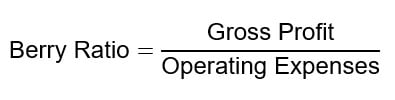
Where:
- Gross Profit is calculated as Net Sales minus Cost of Goods Sold (COGS), with interest income and other non‑operating or extraneous income excluded from the computation.
- Operating Expenses comprise routine operating costs such as Selling, General & Administrative (SG&A), excluding non‑operating items. In line with OECD practice, depreciation and amortisation may or may not be included depending in particular on the possible uncertainties they can create in relation to valuation and comparability.
When should Berry Ratio be used?
Under the OECD Guidelines, the Berry Ratio may be used as a PLI only when very specific conditions are met. The OECD outlines the following criteria:
- The value of the functions performed in the controlled transaction (taking account of assets used and risks assumed) is proportional to operating expenses.
- The value of the functions performed in the controlled transaction (taking account of assets used and risks assumed) is not materially affected by the value of the products distributed, i.e., it is not proportional to sales.
- The taxpayer does not perform, in the controlled transactions, any other significant function (e.g., manufacturing function) that should be reimbursed using another method or financial indicator.
These criteria collectively indicate that the Berry Ratio is suitable only when operating expenses are the primary and nearly exclusive driver of value creation in the controlled transaction.
A situation where Berry Ratio can prove useful is in intermediary activities where the taxpayer purchases goods from an associated enterprise and sells them to other associated enterprises.
Limitations of Berry Ratio
One common difficulty in the determination of the Berry Ratio is that it is very sensitive to the classification of costs as operating expenses or not and therefore can pose comparability issues.
As such, it is most applicable to routine, low‑risk intermediaries or service providers that:
- do not own intangibles,
- do not bear inventory risk, and
- do not perform significant value‑adding functions.
(Chapter II, Section B.3.5 OECD Transfer Pricing Guidelines for Multinational Enterprises and Tax Administrations 2022, Revenue Regulations No. 2-2013, and Revenue Audit Memorandum Order No. 1-2019)
In the context of Philippine transfer pricing audits, the Bureau of Internal Revenue (BIR) closely scrutinises the application of the Berry Ratio, particularly the consistency of cost classification, the presence of pass‑through or non‑operating expenses, and whether the taxpayer’s functional profile genuinely meets OECD criteria. Accordingly, taxpayers intending to use the Berry Ratio must ensure strong documentation, clear Functions, Assets, and Risks (FAR) analysis, and robust comparability support to withstand BIR audit review, especially given the BIR’s increasing focus on validating method selection and challenging PLIs that do not accurately reflect value creation.