

Understanding the Rate of Return on Sales (ROS) Ratio
In transfer pricing, determining an arm’s length return for related-party transactions is critical to ensuring compliance and minimising disputes with tax authorities. Profit Level Indicators (PLI) are the tools used to measure that return. Tax authorities expect that intercompany transactions yield profits comparable to those earned by unrelated parties. PLIs make this test objective.
One commonly applied PLI is the Rate of Return on Sales (ROS) ratio, particularly for entities engaged in distribution and marketing activities.
The OECD Transfer Pricing Guidelines provide a framework for applying this metric under the arm’s length principle, ensuring that multinational enterprises (MNEs) allocate profits fairly across jurisdictions.
What is ROS?
ROS is a financial ratio that expresses the percentage of net sales that becomes operating profit. The formula is:
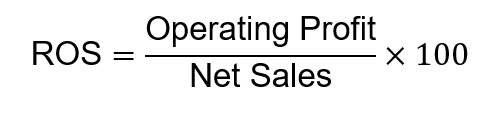
- Operating Profit refers to earnings before interest and taxes (EBIT), excluding non-operating items such as:
- Interest income/expense
- Gains or losses from investments
- Foreign exchange gains/losses
- Restructuring costs
- Impairment losses
- Legal settlements
- Income from discontinued operations
- Other one-time extraordinary items
- Net Sales is total revenue minus returns, allowances, and discounts.
OECD Guidance on ROS
Under the Transactional Net Margin Method (TNMM), the OECD recognizes ROS (often referred to as Operating Margin) as an appropriate PLI for distributors because:
- Sales revenue is a key driver of profitability for distribution businesses.
- ROS aligns with the functional profile of entities engaged in wholesale distribution without significant intangibles.
Amount B Framework (OECD 2024 Update)
The OECD’s Amount B framework introduces a simplified approach for baseline marketing and distribution activities. It uses fixed returns expressed as ROS percentages, reducing the need for complex benchmarking analyses. The applicable ROS depends on factors such as:
- Industry characteristics
- Operating assets
- Expense levels
Why is ROS Important in Transfer Pricing?
- Indicator of Arm’s Length Profitability: Helps determine whether a distributor’s profit aligns with independent companies under similar circumstances.
- Simplifies comparability: For routine distributors, sales are the main value driver. ROS avoids distortions caused by differences in asset bases or financing structures.
- Central role in amount B: Provides standardised returns for low-risk distribution activities, reducing disputes and compliance costs.
- Aligns with risk profile: Distributors typically bear limited risks (inventory, credit risk), so profitability should correlate with sales rather than assets or intangibles.
- Prevents profit shifting: Standardised ROS ranges help detect profit manipulation and ensure fair allocation of taxable income across jurisdictions.
(Chapter II, Section B.3 OECD Transfer Pricing Guidelines for Multinational Enterprises and Tax Administrations 2022, and OECD Amount B Framework 2024 Update)
The Rate of Return on Sales (ROS) ratio is a critical tool in transfer pricing, offering a clear measure of profitability for routine distribution and marketing activities. By linking operating profit to net sales, ROS aligns with the arm’s length principle and the OECD Transfer Pricing Guidelines, ensuring fair profit allocation across jurisdictions. Its adoption under the OECD’s Amount B framework further enhances its relevance, providing a simplified and standardised approach that reduces complexity, minimises disputes, and strengthens global tax compliance.