

Understanding Return on Capital Employed Ratio
The Return on Capital Employed (ROCE) is a profitability indicator that measures how efficiently a company generates operating profits from the capital invested in its operations. It compares operating profit against the capital employed, showing how effectively the business uses its capital to create value. In transfer pricing analysis, ROCE has also emerged as a key financial indicator, especially in cases where assets and capital intensity drive value creation. It helps assess whether the profits arising from related-party transactions are consistent with the arm’s-length principle.
ROCE in the Philippine Transfer Pricing context
ROCE is generally most relevant in the Philippine transfer pricing context when assessing entities whose profitability is primarily influenced by capital-intensive functions rather than routine services alone. These typically include:
- Manufacturing facilities with significant plant and equipment;
- Distribution centres with substantial warehouse and logistics assets;
- Toll manufacturers operating high-value machinery; and,
- Other asset-heavy or capital-intensive industries.
In such cases, traditional margin-based indicators (e.g. operating margin on sales) may not fully reflect the entity’s economic contribution, making ROCE a more informative measure of arm’s-length returns.
Computation of ROCE
ROCE is computed as follows:
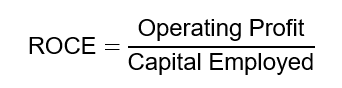
Capital employed generally consists of equity, long-term interest-bearing liabilities, and net operating assets utilised in the business’ operations.
USE of ROCE in transfer pricing analysis
ROCE helps determine whether the profits earned by capital‑intensive entities align with industry benchmarks and comply with the arm’s‑length standard. It also supports the evaluation of whether a related‑party entity is earning an appropriate return based on its functions performed, assets used, and risks assumed.
In many cases, ROCE supports the application of the Best Method Rule, particularly under the Transactional Net Margin Method (TNMM) where capital intensity is a significant factor. ROCE may also be relevant in certain Profit Split Method applications, particularly where multiple related-parties contribute significant capital assets or assume capital-related risks.
(Chapter II: Documentation, OECD Transfer Pricing Guidelines, January 2022, Revenue Regulations No. 2-2013, and Revenue Audit Memorandum Order No. 1-2019)
With the BIR placing greater emphasis on transfer pricing audits under RAMO No. 1‑2019, taxpayers engaged in capital‑intensive activities are strongly encouraged to integrate ROCE into their TP analyses. Ensure that ROCE computations are well‑substantiated, appropriately benchmarked, fully supported by a robust functional, asset, and risk (FAR) analysis demonstrating that capital employed is a key value-creating factor in the controlled transaction, and completely compliant with audit expectations to support arm’s‑length outcomes.