
Summary of BSP Circulars on Sustainability
Overview
This Sustainability Alert is issued to circulate the following Bangko Sentral ng Pilipinas (BSP) Circulars related to sustainability:
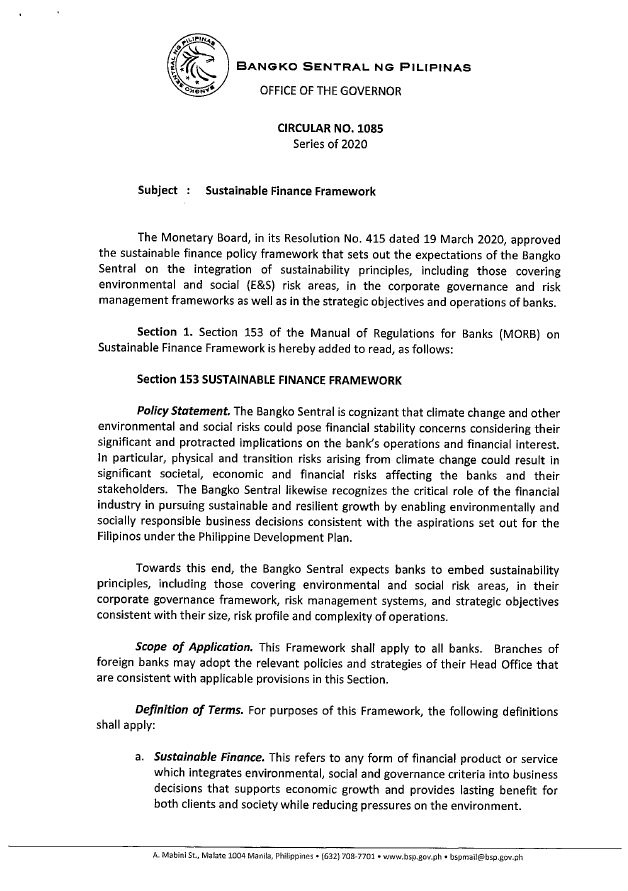
- BSP Circular No. 1085: Sustainable Finance Framework
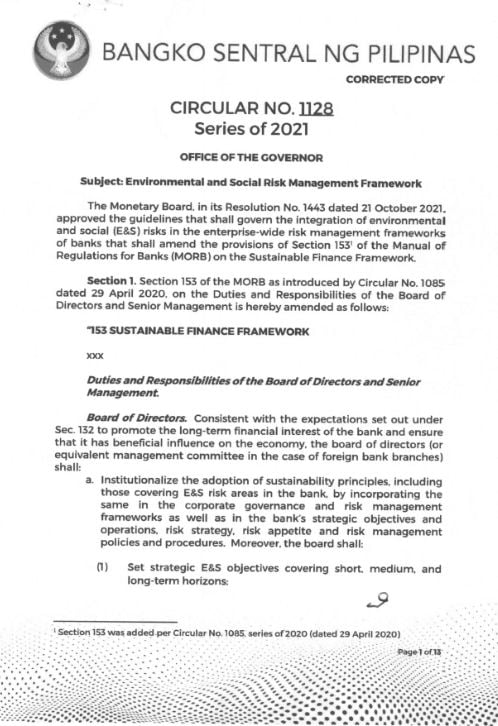
- BSP Circular No. 1128: Environmental and Social Risk Management Framework
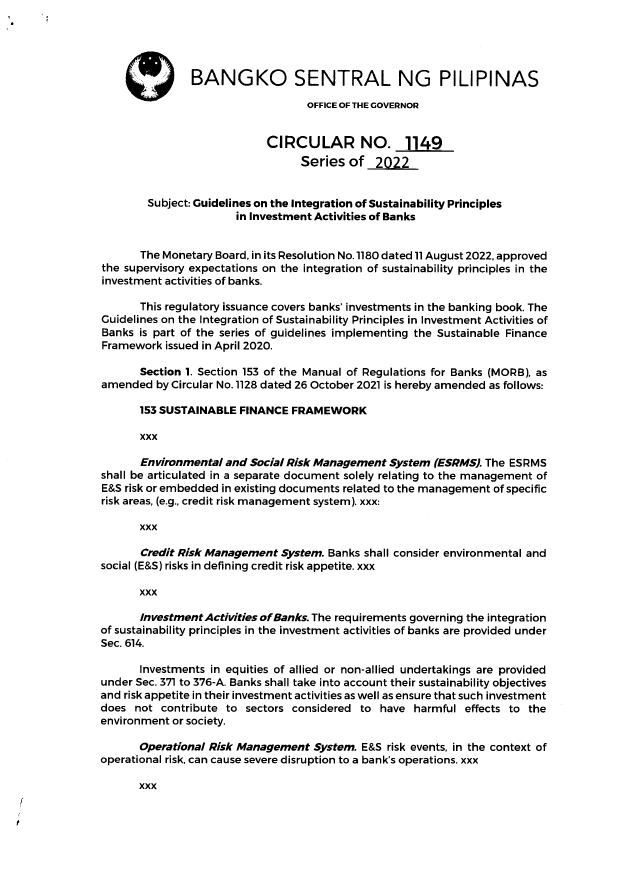
- BSP Circular No. 1149: Guidelines on the Integration of Sustainability Principles in Investment Activities of Bank
- BSP Circular No. 1159: Implementing Rules and Regulations of the Mandatory Agriculture, Fisheries and Rural Development Financing under Republic Act (R.A.) No. 11901 or "The Agriculture, Fisheries and Rural Development Financing Enhancement Act of 2022"
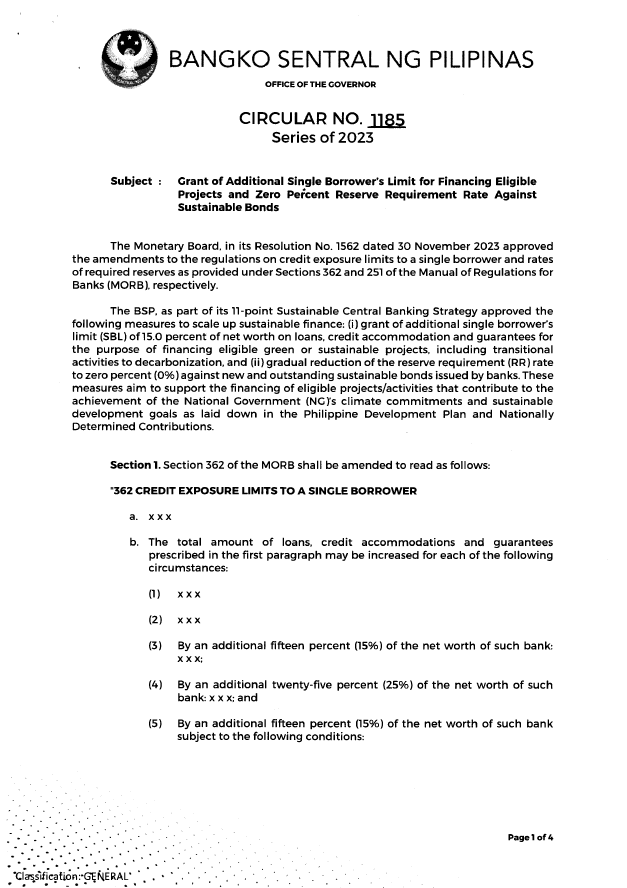
- BSP Circular No. 1185: Grant of Additional Single Borrower's Limit for Financing Eligible Projects and Zero Percent Reserve Requirement Rate Against Sustainable Bonds
- BSP Circular No. 1187: Philippine Sustainable Finance Taxonomy Guidelines
These circulars aim to promote sustainable finance practices within the Philippine banking sector, ensuring that financial institutions contribute to environmental and social sustainability.
Sustainable Finance Framework
BSP Circular Nos. 1085, 1128,1149, and 1187
On 29 April 2020, BSP issued Circular No. 1085 that introduces the Sustainable Finance Framework for banks in the Philippines [Section 153 of the Manual of Regulations for Banks (MORB)]. This framework aims to integrate sustainability principles, including environmental and social (E&S) risk areas, into the corporate governance and risk management frameworks as well as in the strategic objectives and operations of banks.
Section 153 of the MORB was subsequently amended by Circular Nos. 1128 dated 26 October 2021, Environmental and Social Risk Management Framework, 1149 dated 23 August 2022, Guidelines on the Integration of Sustainability Principles in Investment Activities of Bank, and 1187 dated 21 February 2024, Philippine Sustainable Finance Taxonomy Guidelines.
The key areas of the framework are the following:
- Duties and Responsibilities of the Board of Directors and Senior Management,
- Environmental and Social Risk Management (ESRM) System,
- Credit Risk Management System,
- Investment Activities of Banks,
- Issuance of Bonds and Commercial Papers,
- Operational Risk Management System,
- Internal Audit and Compliance Function, and
- Disclosure Requirements.
The Framework highlights the crucial role of the board in spearheading and embedding sustainability principles within the organization. It underscores the essential aspects of board and senior management responsibilities, including fostering company culture, overseeing risk management, ensuring accountability, and maintaining transparency.
Furthermore, this sets forth expectations for managing environmental and social risks associated with banks' credit and operational risk exposures. It also emphasizes the integration of sustainability principles into banks' investment activities, particularly within the banking book.
With the release of the Philippine Sustainable Finance Taxonomy Guidelines (SFTG) by BSP, it has reaffirmed its commitment to sustainable finance. For more information on SFTG, please refer to P&A Accounting Alert dated 25 March 2024.
Implementing Rules and Regulations of the Mandatory Agriculture, Fisheries and Rural Development Financing under Republic Act (R.A.) No. 11901 or "The Agriculture, Fisheries and Rural Development Financing Enhancement Act of 2022"
BSP Circular No. 1159
On 4 November 2022, BSP issued Circular No. 1159 (Section 331 of MORB) which implements the rules and regulations of the Mandatory Agriculture, Fisheries, and Rural Development Financing under R.A. 11901. This promote inclusive and broad-based economic growth by enhancing access to financial services for rural communities and agricultural and fisheries households.
Section 331 of the MORB was amended in its entirety by the issuance of this circular and further amended by Circular No. 1174 dated 9 June 2023. The key areas of the circular were as follows:
- Qualified rural community beneficiaries
- Required allocation and period covered for AFRD financing
- Modes of compliance
- Computation of total loanable funds
- Syndicated type of AFRD financing
These guidelines aim to support rural development by ensuring that financial institutions actively participate in providing accessible and affordable financial services to rural communities.
Grant of Additional Single Borrower's Limit for Financing Eligible Projects and Zero Percent Reserve Requirement Rate Against Sustainable Bonds
BSP Circular No. 1185
On 13 December 2023, BSP issued Circular No. 1185 that introduces significant incentives for green lending and sustainable finance. This circular amends the regulations on credit exposure limits to a single borrower and rates required as provided under Section 362 and 251 of the MORB, respectively.
The BSP, as part of its 11-point Sustainable Central Banking Strategy approved the following measures to scale up sustainable finance:
- Grant of additional single borrower’s limit (SBL) of fifteen percent (15%) of net worth on loans, credit accommodation and guarantees for the purpose of financing eligible green or sustainable projects, including transitional activities to decarbonization, and
- Gradual reduction of the reserve requirement (RR) rate to zero percent (0%) against new and outstanding sustainable bonds issued by banks.
These measures aim to support the financing of eligible projects/activities that contribute to the achievement of the National Government’s climate commitments and sustainable development goals as laid down in the Philippine Development Plan and Nationally Determined Contributions.
For further guidance, please refer to the attached circulars.
BSP Circular No. 1085
BSP Circular No. 1128
BSP Circular No. 1149
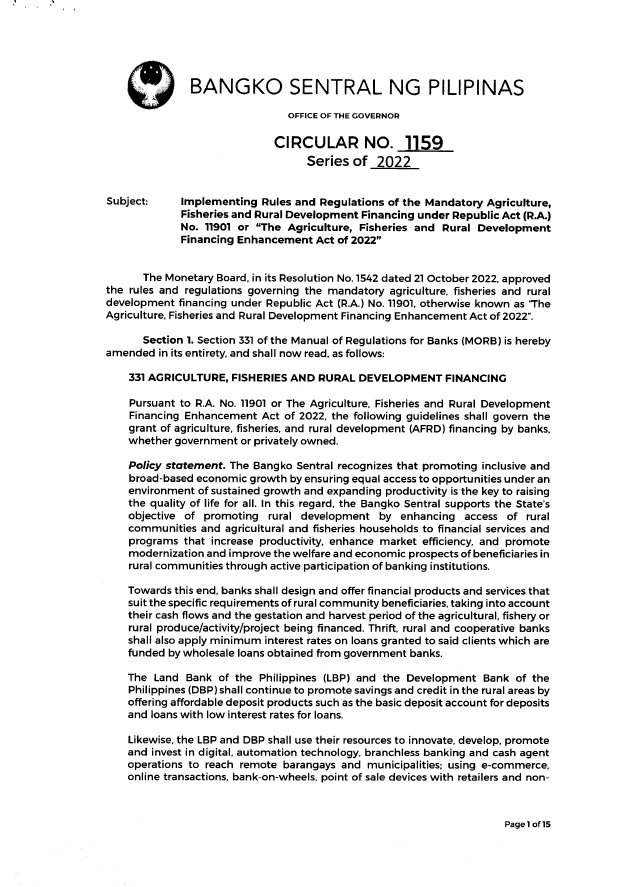
BSP Circular No. 1159