

There may be a storm brewing in some of the world’s largest economies as businesses come to terms with a skilled worker shortage. Are technology and mobility two options for businesses struggling to find talent?

Asia Pacific (APAC) is a region in flux. In 2018, businesses must contend with numerous challenges, not limited to environmental risks and an ageing population. But with disruption comes great opportunity.
Despite a global downturn in business optimism, confidence is buoyant in ASEAN, reaching the highest level ever recorded by the IBR in Q2 2018. However, growing concerns over exchange rate fluctuations among South East Asian (ASEAN) businesses threaten to reverse their positive outlook, according to new research from Grant Thornton’s International Business Report (IBR).
European businesses have a spring in their step. Data from our International Business Report (IBR) finds that business optimism across the EU sits at net 60% in the first quarter of 2018. This is the highest optimism figure recorded in Europe in over a decade of IBR research.
The Eurozone has been a weak pillar of the global economy for many years. But now, in 2017, we’re getting used to a new narrative.
In 2017, leadership teams are grappling with new conditions of global risk. With few predicting the happenings of recent years, businesses are striving to prepare for the further possibility of inconceivable events.
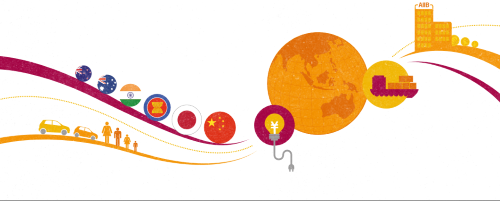
Asia Pacific is the engine room of the global economy. GDP growth across the region outstrips the West; while the vast majority of European and North American economies are forecast to grow by less than 2% in 2016, many of those in Asia Pacific are looking for at least 3% growth and in some cases more. And while the Chinese economy cools, increasing economic co-operation between its neighbours has the potential to offset this.
Exploring a region of diversity and opportunity Asia-Pacific is a region of huge diversity, not only culturally and geographically, but economically too. Japan is a member of the G7 and a world leader in automotive and technology. Singapore competes with London and New York as a global financial centre. Australia and New Zealand are sometimes treated as a region in their own right due to both geography and culture - it takes over 12 hours to fly from Delhi to Sydney and history ties them more to the UK and US - but they are increasingly connected to Asia through trade.