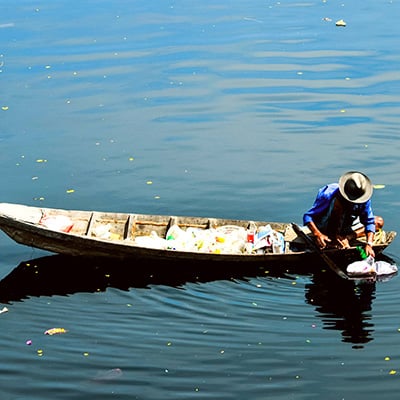
It is said that global shifts, movements, and issues know no borders; what happens in one part of the world can impact us all.
A popular proverb says that “a journey of a thousand miles begins with a single step." In this sense, we have taken many steps towards moving away from our plastic-filled legacy, from banning single-use plastics such as straws in certain cities to encouraging the use of recyclable materials from the private sector.
As mid-market businesses in the Philippines gear up to compete on the global stage, a significant change must be made in the business landscape. To achieve parity with international competitors, mid-market businesses in the Philippines must focus on three critical areas: brand development, people investment, and sustainability.
Picture this scenario: A real estate developer wins a bid to convert a large swath of forested land into a housing project. On the surface, this seems like a win-win. The housing shortage gets addressed, jobs are created, and the economy gets a boost. But beneath this apparent victory lies a cost: the chirping birds, the rustling leaves, and the communities intertwined with this land’s history are at risk of vanishing. These environmental and social costs often go unnoticed. As accountants, we can put a spotlight on these hidden costs through the practice of green accounting.
One could say that the power of taxation is the lifeblood of a nation; not only does it have the power to create, but it also has the power to destroy. Being its primary source of revenue, it funds governments, making them self-sufficient as much as possible and diminishing their reliance on external funding to achieve their goals.
The most successful organizational executives have an unquenchable drive for expansion, even in a challenging economic climate. Businesses must have the hunger for growth by making the appropriate decisions on supply chain management, technology, market research, integration, and human resources. And in the dynamic landscape of commerce, exploring the longevity of a business is akin to embarking on a captivating journey through time.
The year 2024 has arrived, and perhaps most of us already have new year’s resolutions. Yet with all our desires to become better people, is becoming sustainable a part of it?
We often hear these reassuring words when we go through the end of a journey. However, you can also attribute these words to the concept of Circular Economy. These words are also somehow similar to what Antonine de Lavoiser, the great chemist and mathematician in the 18th century, noted in his experiments, “Nothing is lost, nothing is created, everything is transformed” – it suggests that nothing is lost thus should undergo a transformation to be continually repurposed and reintegrated into the economy.