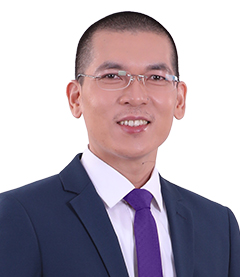
Nikki is a Partner in P&A Grant Thornton’s Tax Advisory and Compliance Practice Area. He is also the head of the Firm’s Transfer Pricing team.
Nikki has been with P&A Grant Thornton since he started his professional career in 2007. He has gained extensive experience in providing tax compliance/due diligence audit and tax outsourcing services to local and multinational companies. He has also crafted tax studies and opinions, as well as transfer pricing studies, for several clients.
Nikkolai completed his bachelor's degree in accountancy, summa cum laude, from the Far Eastern University - Manila. Nikki earned a Postgraduate Certificate in General Management, a Postgraduate Certificate in Business Management and Transformation, and a Postgraduate Diploma in Management at the Asian Institute of Management (AIM).
Memberships
- Member, Philippine Institute of Certified Public Accountants (PICPA)
- Member and 2023 Chairman, Tax Advocacy Committee, Association of Certified Public Accountants in Public Practice (ACPAPP)
- Member, Tax Management Association of the Philippines (TMAP)
- Member, Private Multisectoral Group (PMSG)